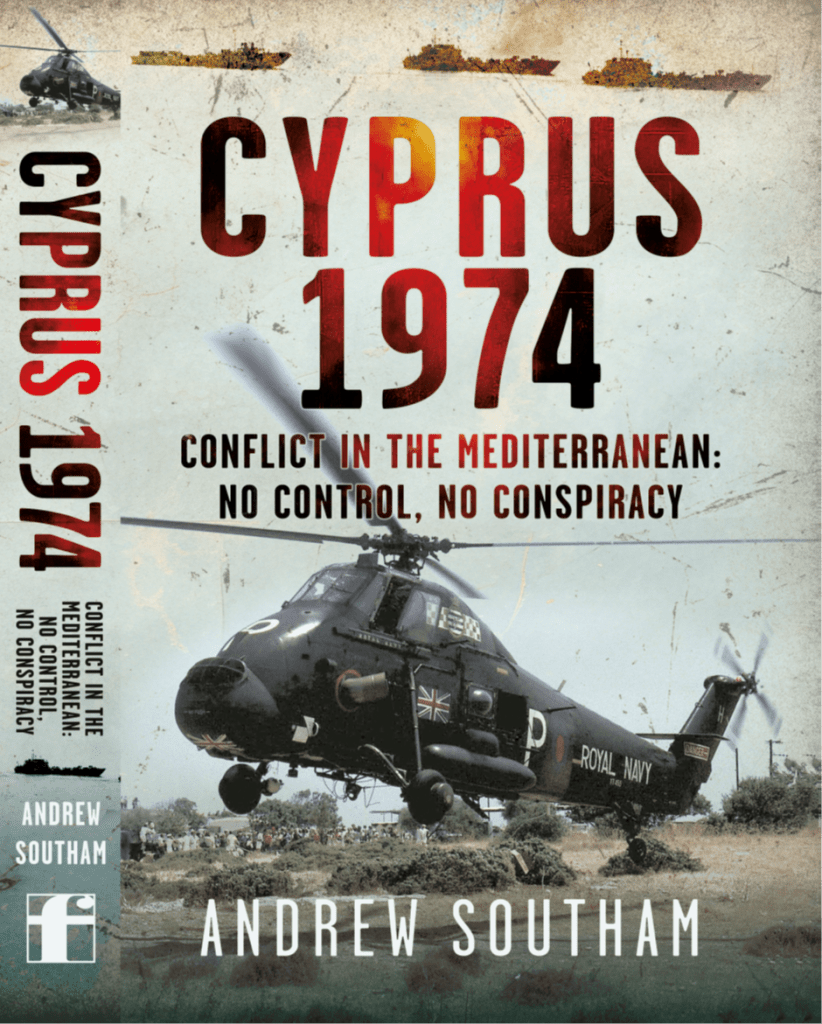
‘Cyprus 1974, No Control, No Conspiracy’
Fifty-one years ago in February 1975, Turkish Cypriots declared the north of Cyprus to be a separate state from the rest of the island. Events leading to that situation the previous year, in 1974, nearly saw British forces fighting Turkish ones, when foreign secretary James Callaghan ordered servicemen to protect the island’s main airport at Nicosia.
Over three thousand people were killed, old scores settled, an American ambassador was assassinated in Cyprus, a top CIA spy was murdered in Greece, Britain managed the largest airlift since 1948 including a dramatic naval rescue, Turkey and Greece nearly went to war (their commandoes did fight each other), Henry Kissinger told Callaghan to stop behaving like a madman, and a military regime in Greece fell giving way to democracy.
In consequence, Callaghan along with prime minister Harold Wilson tried to relinquish Britain’s sovereign bases on the island in the 1975 defence review. Burnt and jaded by their inability to influence the terrible events in 1974 when Turkey twice intervened in Cyprus, they wanted out.
American president Gerald Ford and secretary of state Kissinger stopped them in brutal fashion (compare the Chagos Islands today). Britain’s bases mattered in the Cold War Eastern Mediterranean, mattered in intelligence and mattered for stability in the Middle East. They said no, Britain stayed and the bases have been used in every significant military activity since then.
My history of Turkey’s intervention in Cyprus over the summer of 1974, (‘Cyprus 1974, No Control, No Conspiracy’) is out now with Pen and Sword https://www.pen-and-sword.co.uk/Andrew-Southam/a/6145.
The Cold War’s Mediterranean Hotspot: Britain’s escape from Malta 1972 – 1979
‘You can stay if you want to, we’re pulling out and pulling out fast’, said British prime minister Ted Heath to fellow Italian premier Emilio Columbo in January 1972. He had just ordered an emergency withdrawal operation when renegotiations over Britain’s continued 180-year-old presence in Malta collapsed and its socialist, neutralist, table-thumping prime minister, Dom Mintoff, threatened measures against 3,500 service people and their families.
Dom Mintoff’s general election victory in June 1971 changed Cold War dynamics in the Western Mediterranean and risked handing over the island, a strategic choke point 60 miles from Sicily and 180 miles from North Africa, to the Soviet Union, threatening Italy, Nato’s exposed southern flank and the US Sixth Fleet.
Nato wanted in, Britain wanted out, Libya wanted influence, the Soviets also wanted in, China didn’t want the Russians in, the Italians with a country scarred by near civil war between left and right didn’t want the communists anywhere and the Americans were terrified about any change.
My work, due in late 2026 with Pen and Sword, tells the exciting story of high politics and events on the ground as Britain struggled to relinquish the island in the 1970s in the context of the Cold War when dealing with the incomparable Mintoff.
In development
I have started a history of Britain through the prism of extradition, which is a story of medieval battles, pirates, revolutionary Europe, Civil War refugees, Napoleonic spies, escaped enslaved people from the United States and nineteenth century dynamite experts in a gallery of colourful figures and events affecting international affairs across the last millennium.
Other early stage projects include Historical Mysteries, Bronze Age Britain and a history of the cadet forces.
 Andrew Southam